
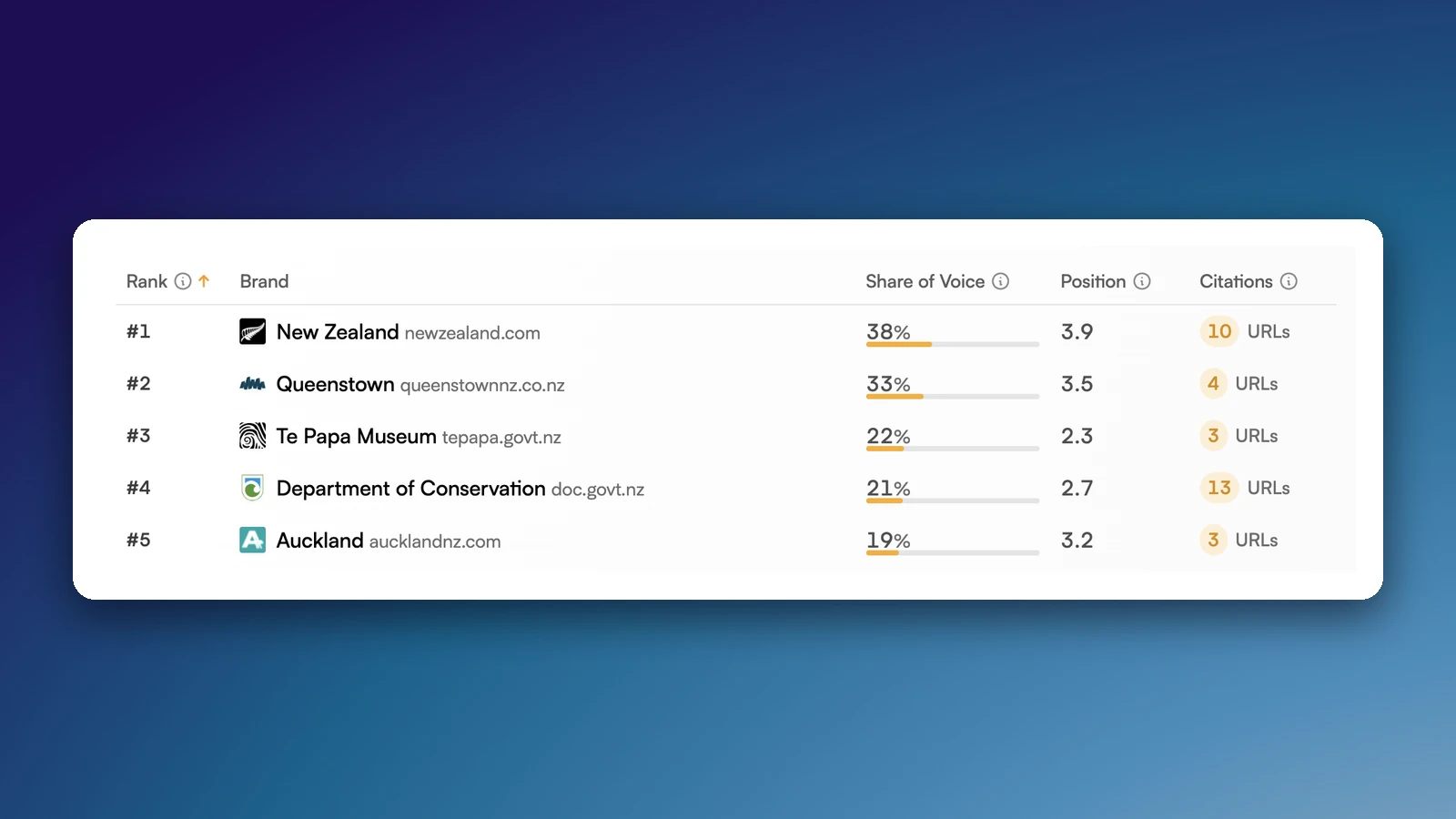
GEO is fast becoming the most talked-about marketing lever for our clients in 2026. They're getting data on what AI is saying about them across their customer journeys, topics and core entities. But every new specialty brings fresh jargon, acronyms and definitions, and the ones that matter most are about measurement. GEO has a few ways of measuring performance, the metrics answer different questions, and the numbers that look most alike answer opposite things. Focus on the wrong one and you can spend substantial content and budget moving a figure that was never the problem.
The measurement structure boils down to two things. An AI engine can name your brand in its answer, and it can cite your website as a source. Those are different events. It can name you without citing you, cite you without naming you prominently, or build the whole answer from your page while pointing the recommendation somewhere else.
What GEO measures
A GEO report scores you with four numbers:
- Mention tells you whether your brand showed up.
- Share of voice tells you how much of the named-brand conversation you owned.
- Citation tells you whether your website was used as a source.
- Source share tells you how much of the cited-source layer you owned.
Those four line up on two questions: is the engine naming your brand or citing your pages, and are you measuring whether it happened at all or how much of the total was yours? The table reads both ways.
| Did it happen? (answer-level) | How much was yours? (share) | |
|---|---|---|
| Named | Mention: percent of answers that name your brand | Share of voice: your slice of all named brands |
| Sourced | Citation: percent of answers that cite your site | Source share: your slice of all cited source links |
So the trap has a shape. Share of voice and mention sound alike, but one is a share of the named-brand space and the other is a yes-or-no on the answer. Share of voice and source share sound alike, but one is about being named and the other about being cited. Cross them and the report congratulates you on the wrong thing.
Named, but not the source
This is the pattern that breaks most first reads. It comes from a travel brand we measured.
On its own brand queries, the kind where someone types the company's name, it ranked first by share of voice. It owned half the named-brand conversation. Read the "are we visible" line on its own and it's a triumph.
Then the source share. On those same queries, its own website was the cited source only one answer in eight. The engines said its name, then grounded the answer in other domains. Named, not the source.
And on the category queries, the ones without the brand name, where a traveller just asks for the best operator to somewhere, it was absent on all four numbers. Not named, not cited, nowhere. The consideration set the engines built belonged to the big online travel agents and a handful of specialists.
One brand, three different truths in a single report: it owns the named-brand conversation on its own name, it is barely the source even there, and it vanishes the moment a query stops naming it.
That reframes the work, and the reframe is the point:
- A "we're invisible, publish more pages" sprint would have aimed at the wrong layer. On the brand queries the brand was already winning share of voice. More pages don't lift a low source share, and they do nothing for a category where the brand isn't in the conversation at all.
- Low source share on queries you already win is an authority problem. Being the cited source is earned with structured, quotable pages and third-party validation, not volume.
- Absence on the category is a different job again. Getting into the set the engines draw on is entity and association work before it is content.
Three numbers, three levers. Collapse them into one tidy "GEO score" and you lose the only thing the report was trying to tell you.
Why naming the number matters
Every broken GEO target we've seen is one metric read as another, then chased as if it were missing data. The cure is not a bigger dashboard. It's naming the number before you act on it.
Three checks before any GEO figure becomes a target:
- Named or sourced? Mention and share of voice are about your brand being talked about. Citation and source share are about your pages being used. They take different work.
- Event or share? Mention and citation ask whether it happened at all. Share of voice and source share ask how much of the total was yours. A low share with a healthy event rate is a crowding problem, not an absence.
- What lever moves it? Pages and structure earn citations and source share. Being named more often, or at all, is usually entity and reputation work that lives off the page.
Get the number named and the strategy writes itself. Get it wrong and you'll spend a season moving a figure that was never the one holding you back.
See what AI is saying about your brand
GEO Setup baselines your AI search visibility across the engines your customers use, then connects it to the outcome that matters to your business.
Rather talk it through first? Book a call. Want to keep up as the ground shifts? Get our newsletter.
Related reading

Written by
Hannah Stuart
Head of Strategy
Hannah leads strategy at Data Story, working with clients to turn marketing data into growth roadmaps. She brings deep experience in full-funnel digital strategy, attribution modelling, and performance marketing across New Zealand and Australian markets.
LinkedInRelated articles

SEO & GEO
How destinations can improve performance using category search SEO
28 September 2026
Category search happens when a traveller knows the kind of trip they want but has not chosen where to take it. We show which pages reach these undecided searchers and how to build them.
Read article
SEO & GEO
We have built a custom solution to the biggest challenge in destination marketing right now - AI Search Visibility
22 July 2026
See what AI tools say about your destination or experience today, then improve it. Our custom solution makes your visibility in AI search measurable across the customer journey, then gives you a plan to improve it.
Read article
SEO & GEO
Your destination is being recommended in AI. Can you see it?
21 July 2026
The trip now gets planned inside a chat, and most destinations have no way to see how they show up there. A GEO playbook for tourism boards, regions and luxury destinations: what to measure, and where to start this week.
Read article