

Tourism marketing has always been seasonal. What's changed in 2025 is that the nature of seasonality has shifted — driven by remote work flexibility, AI-assisted travel planning, and a post-COVID reset in traveller expectations.
The operators we work with who are growing aren't doing more. They're doing the right things at the right time, with the right data to back it up.
💡 Tip
This article draws on campaign data from 30+ tourism and hospitality clients managed by Data Story across New Zealand and Australia. Figures are aggregated and anonymised.
The Booking Window Has Changed
Pre-2020, the tourism industry operated on predictable booking windows. International visitors planned 3–6 months out. Domestic visitors booked 2–6 weeks out. You could map your media spend to those curves and hit reasonable efficiency.
That's no longer true.
Booking window distribution — NZ tourism clients (2022 vs 2024)
The share of last-minute bookings (0–14 days) has nearly doubled. This has real implications for how you structure campaigns — you can't rely on long-horizon awareness campaigns converting in the same cycle.
What this means for your campaigns:
- Maintain always-on lower-funnel activity, not just seasonal bursts
- Build remarketing audiences during awareness phases for last-minute conversion
- Use price and availability signals to trigger urgency-based creative
AI Is Changing the Top of the Funnel
This is the shift that's most underappreciated in the industry right now.
Travellers are increasingly starting their research on ChatGPT, Perplexity, and Google's AI Overviews — not on traditional search. They're asking questions like:
- "What's the best time to visit Queenstown?"
- "Things to do in New Zealand in winter"
- "Best adventure tours for families in NZ"
If your business isn't in the AI's answer, you're invisible at the top of the funnel.
⚠️ Warning
We've tracked a 34% decline in informational search traffic (top-of-funnel) for several tourism clients since Google's AI Overviews launched in NZ. This traffic isn't gone — it's shifted to AI-generated answers.
What Is GEO (Generative Engine Optimisation)?
GEO is the practice of optimising your content to appear in AI-generated responses. It's different from traditional SEO in several ways:
| Dimension | Traditional SEO | GEO |
|---|---|---|
| Target | Search engine rankings | AI model citations |
| Signal | Backlinks, on-page optimisation | Factual density, citation worthiness |
| Measurement | Rankings, organic sessions | Share of voice, mention frequency |
| Content type | Keyword-optimised pages | Authoritative, structured content |
| Update cycle | Months | Weeks (models update frequently) |
The businesses showing up in AI answers share common traits: they publish specific, factual content; they're cited by credible third-party sources; and they answer real traveller questions with structured, scannable information.
What's Working in Paid Media
Google: Performance Max Is Maturing
PMax (Performance Max) campaigns have matured significantly. When set up correctly, they now outperform standard Search + Shopping combinations for most tourism clients — but the setup matters enormously.
PMax vs Standard campaigns — average ROAS comparison (Data Story clients)
The difference between "poor setup" and "optimised" PMax is almost entirely in:
- Asset quality — high-resolution images, multiple headline/description variations, proper video assets
- Audience signals — seeding PMax with your best converting audiences from historical data
- Brand exclusions — preventing PMax from cannibalising branded search you'd win anyway
Meta: Creative Fatigue Is Accelerating
Creative fatigue — the decline in ad performance as an audience sees the same creative repeatedly — is happening faster than ever on Meta. Two years ago, a strong creative set might run for 90 days before significant performance degradation. Today, that window is often 3–4 weeks.
Our recommendation: build creative production into your ongoing retainer, not just campaign launches. Tourism businesses with a continuous creative refresh schedule consistently outperform those who launch once per season.
Seasonal Budget Strategy
The biggest strategic mistake we see in tourism marketing is flat budgeting. Equal spend across 12 months makes no sense when demand is anything but equal.
Recommended budget allocation vs flat spend — Queenstown tourism business
Demand-responsive budgeting — shifting spend to match and slightly lead demand peaks — typically delivers 20–35% better ROAS compared to flat budgeting with the same total annual spend.
The Content Opportunity Nobody Is Taking
Most tourism operators publish blog content to hit an SEO checklist. The result is generic, surface-level articles that rank poorly and convert nobody.
The content opportunity in tourism right now is specific, operational knowledge that only insiders have.
Things like:
- The best time of day to visit a specific attraction (not "morning is best" — actual times, actual reasons)
- How to compare competing experiences for a specific type of traveller
- What to expect at different price points, in honest detail
- Local knowledge that visitors can't get from a tour operator website
This is the content that earns AI citations, builds trust with late-stage researchers, and creates a genuine reason to bookmark and return.
ℹ️ Info
We're currently working on a Tourism Content Playbook covering structure, distribution, and GEO optimisation for NZ operators. Subscribe to our newsletter to be the first to receive it.
Want to talk through your tourism marketing strategy? Book a free strategy call — no pitch, just a conversation about where your biggest opportunities are.

Written by
Hannah Stuart
Head of Strategy
Hannah leads strategy at Data Story, working with clients to turn marketing data into growth roadmaps. She brings deep experience in full-funnel digital strategy, attribution modelling, and performance marketing across New Zealand and Australian markets.
LinkedInRelated articles

SEO & GEO
How destinations can improve performance using category search SEO
28 September 2026
Category search happens when a traveller knows the kind of trip they want but has not chosen where to take it. We show which pages reach these undecided searchers and how to build them.
Read article
Destination and Experience
Your destination does not have an awareness problem
23 September 2026
How to tell whether awareness is your problem, and what to fix before you fund another campaign.
Read article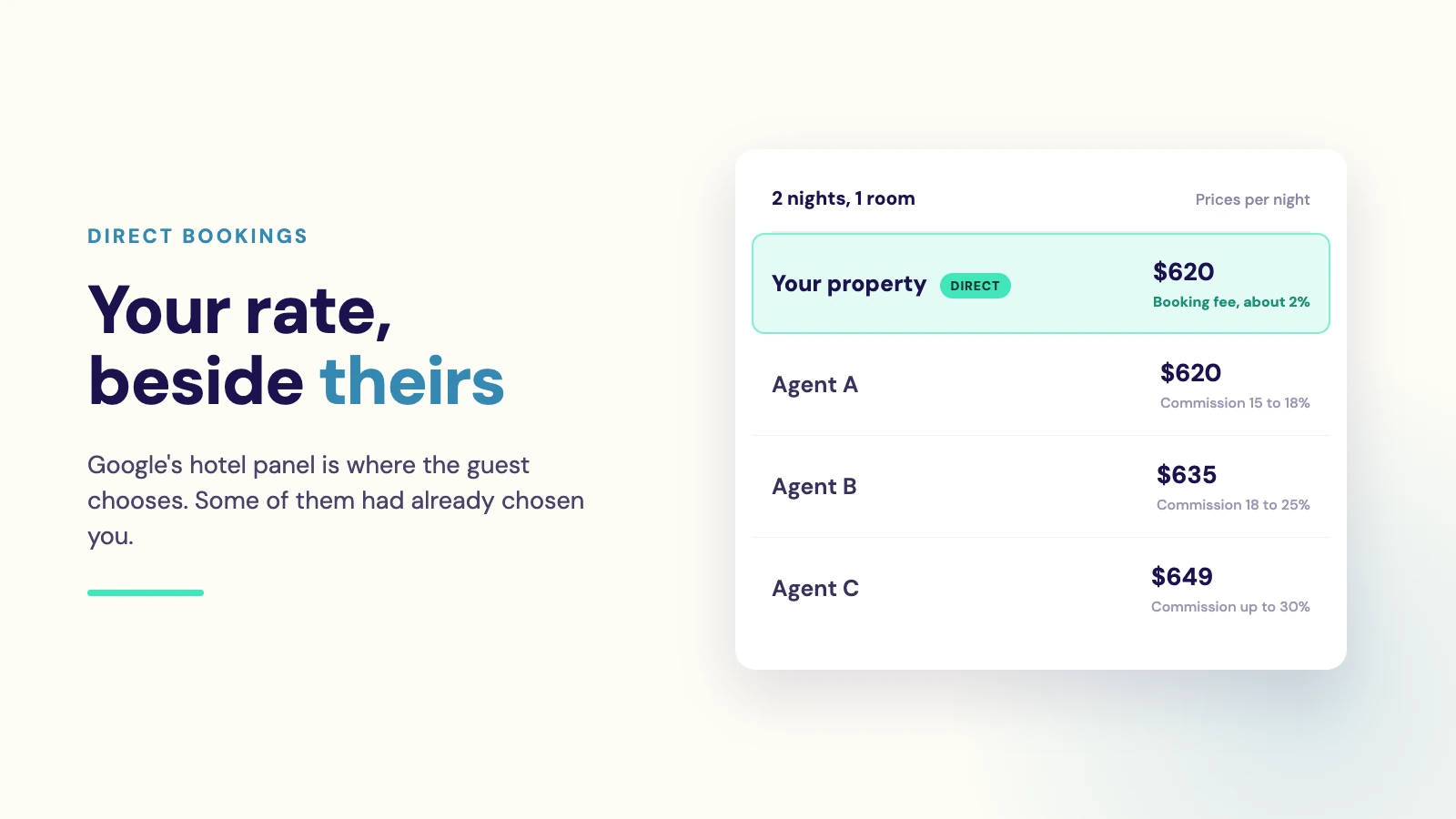
Paid Media
Why pay commission on guests you already won?
13 August 2026
Your brand, your reputation and your marketing earn the guest. Then the booking goes to an OTA, and the commission and the guest relationship go with it. How to use Google Hotel Ads to hold on to the booking, the relationship and the data.
Read article