
The word "data" means different things to different people. But when it comes to tourism marketing, understanding the different types of data and their uses can be the difference between attracting more visitors or missing the mark.
Being clear on the type of data you're collecting, who it's for, and why you're collecting it can save you a lot of confusion — and help you make strategic decisions that grow your business. After all, being clear is kind.
Data for strategy vs. data for optimisation
"Where will you play and how will you win?" — A. G. Lafley
In the fast-paced world of tourism, with changing travel trends and evolving consumer behaviours, it's critical to understand which areas of your business need attention.
"Effectiveness is summed up by 'doing the right things' and efficiency is summed up by 'doing things right'." — Peter Drucker
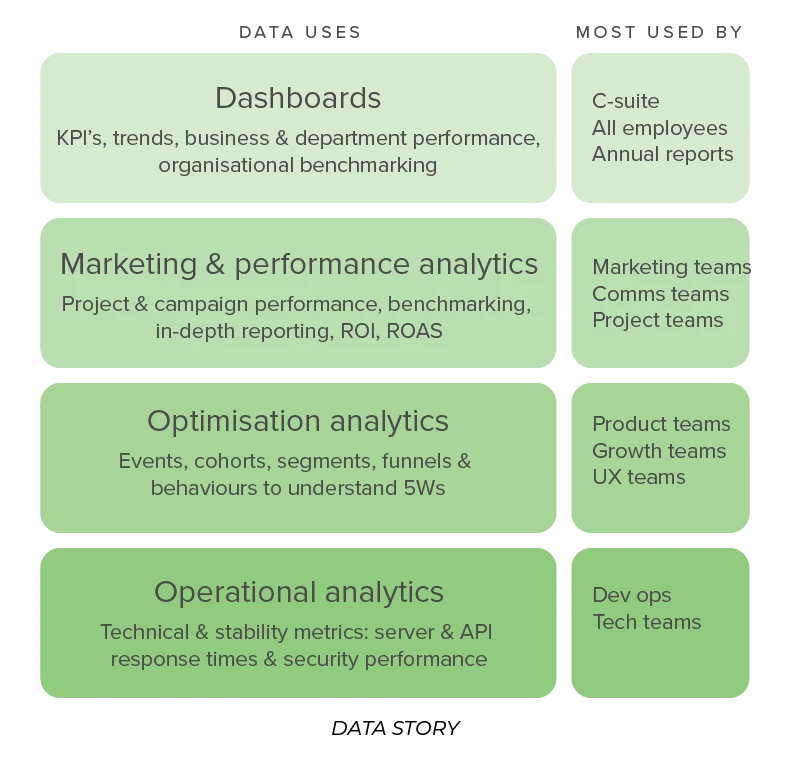
In tourism marketing, data for strategy helps you do the right things (like tapping into emerging travel trends or focusing on repeat visitors) while data for optimisation helps you do things right. You need both to be successful in marketing — you need to execute well, on your highest leverage activities.
This article is about data for strategy.
Data for strategy
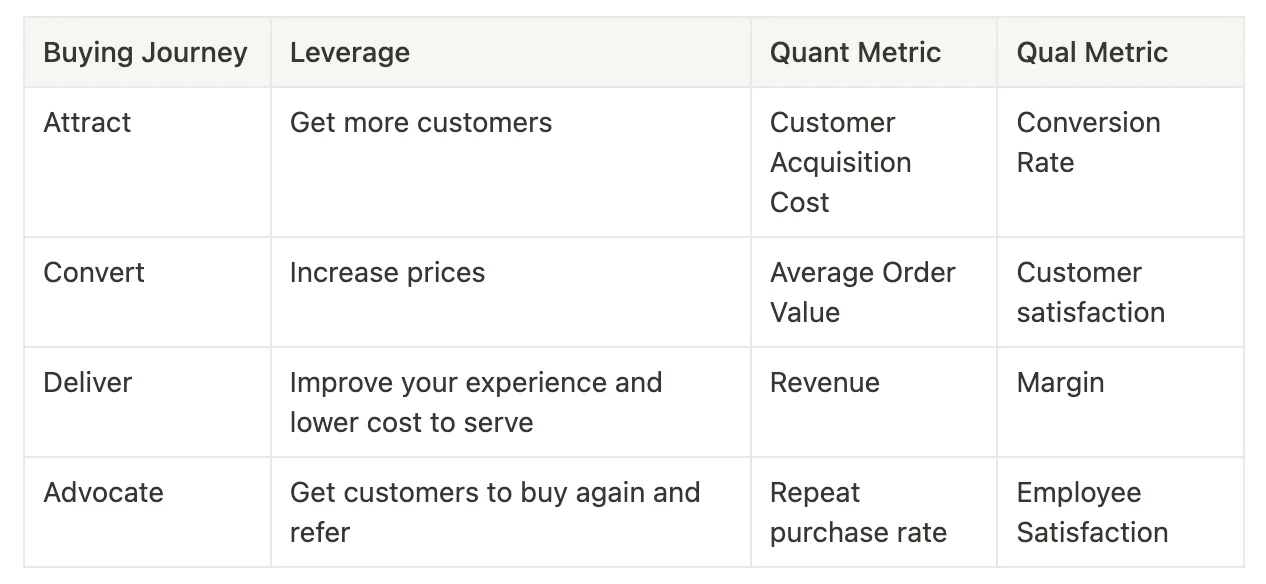
There are only four ways to grow a business:
- Get more customers
- Increase your prices
- Get those same customers to spend again
- Lower your cost to deliver your services
Based on this, you need to measure how well your tourism business is doing at each of these four points of leverage.
We recommend pairing a quantitative and a qualitative metric together. This ensures quality and quantity. It's no good having one without the other.
The four most common metrics that quantify how well you're doing at each point of leverage:
- Customer Acquisition Cost — How much are you spending to get each new visitor?
- Average Order Value — What's the average spend per visitor or booking?
- Revenue — Are you maximising each visitor's spend on-site (food, tours, activities)?
- Repeat purchase rate — How many of your visitors are coming back?
The four qualitative metrics that show the quality or health of your performance:
- Conversion rate — How well are your marketing efforts turning leads into bookings?
- Customer satisfaction — What are visitors saying about your business? Reviews and ratings matter.
- Employee satisfaction — Are your staff engaged and delivering top-notch service? In tourism, your people are as important as your product.
- Margin — Are your costs under control?
Trend lines and comparisons
Each of these metrics needs a trend line, compared to the previous year or season.
The trend line tells you the trajectory of performance, and the comparison metric shows the difference. Because in tourism, seasonality matters. Year-on-year comparisons help you account for peak travel periods and holidays, while month-on-month comparisons show how you're performing over time and whether you're keeping pace with changes in demand.
Never view a metric without a trend line or comparison. A rise in bookings might seem great, but if it's not keeping pace with the same period last year, you could be falling behind. Data without context can lead to poor decisions.
Where should you focus?
Looking at your eight metrics and how they are trending should inform you of your opportunities.
Often your first opportunity is to make sure you have the data to measure these eight metrics. You may need to set up a program of work to track them. Get in touch if that's where you are.
Once you have the data, the analysis is straightforward. Take the weakest metric, list ways to improve it, and determine if the investment to test ways to improve that metric is worth it.
Get in touch
Tourism marketing is a fast-changing landscape. Making data-driven decisions is what sets successful businesses apart from the rest.
Data Story can help you track, analyse, and optimise your marketing strategies, ensuring you're focusing on what really matters. Get in touch to ensure you're making the right moves and optimising your marketing efforts for maximum growth — let's help you get more visitors, drive repeat business, and grow to new heights.

Written by
Dave Hockly
Director
Dave founded Data Story with a belief that better data leads to better marketing. With over a decade in digital marketing across tourism, hospitality, and growth businesses, he specialises in turning complex analytics into clear business strategy. Dave leads client relationships and oversees the agency's strategic direction.
LinkedInRelated articles

SEO & GEO
How destinations can improve performance using category search SEO
28 September 2026
Category search happens when a traveller knows the kind of trip they want but has not chosen where to take it. We show which pages reach these undecided searchers and how to build them.
Read article
Destination and Experience
Your destination does not have an awareness problem
23 September 2026
How to tell whether awareness is your problem, and what to fix before you fund another campaign.
Read article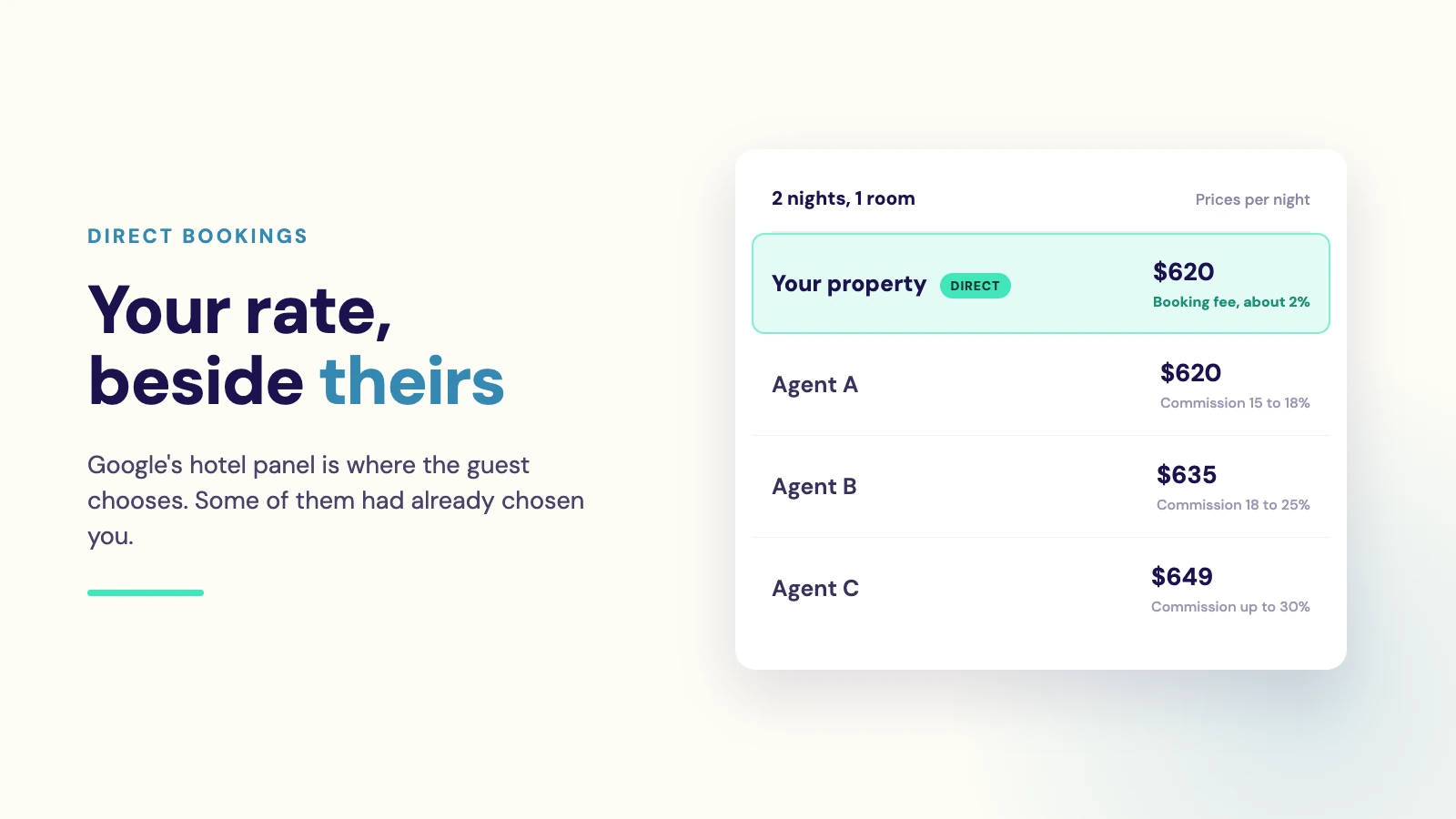
Paid Media
Why pay commission on guests you already won?
13 August 2026
Your brand, your reputation and your marketing earn the guest. Then the booking goes to an OTA, and the commission and the guest relationship go with it. How to use Google Hotel Ads to hold on to the booking, the relationship and the data.
Read article