
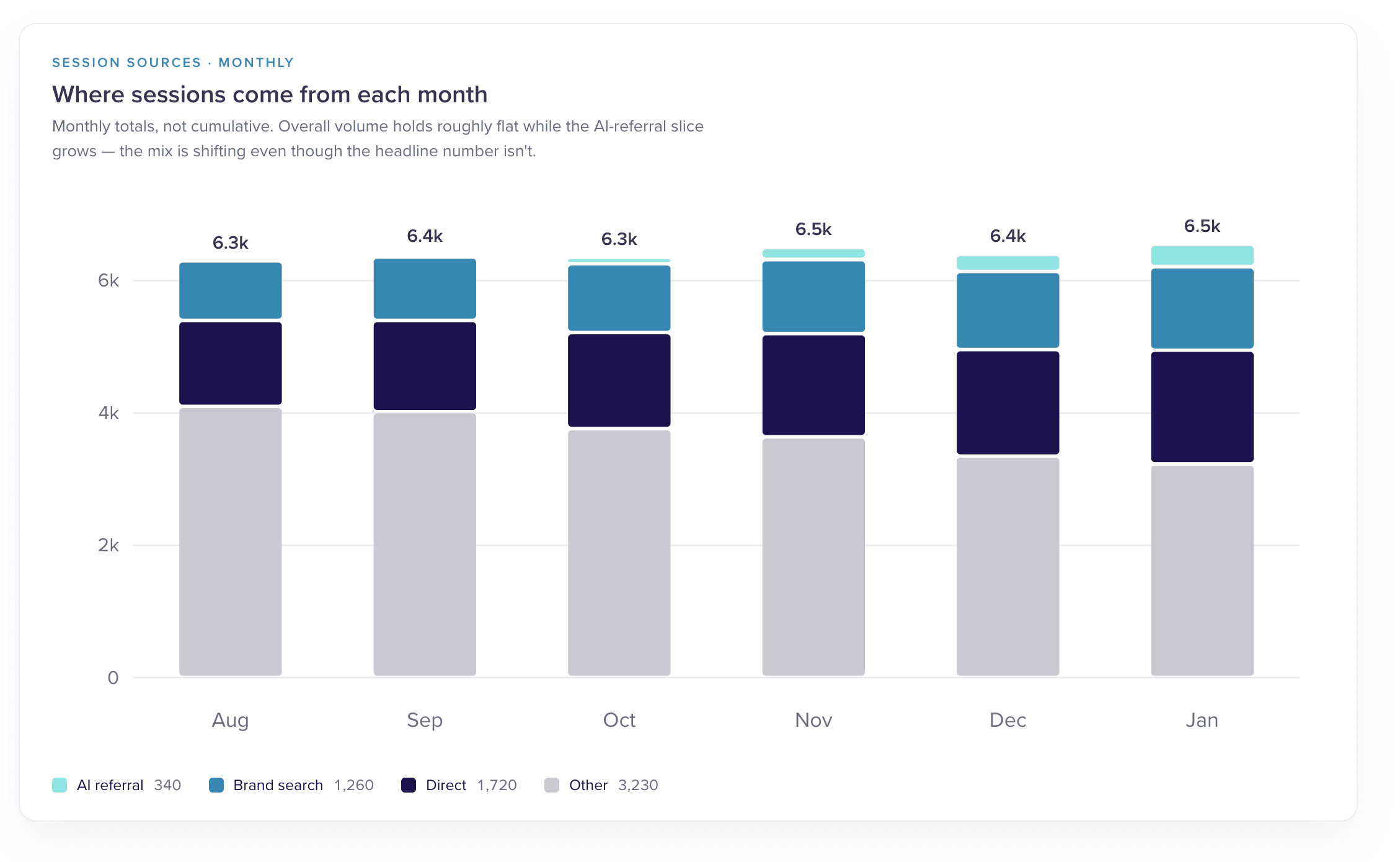
A traveller dreams about a trip for months before they book, across dozens of touchpoints you never see and cannot control. That gap between inspiration and booking is what makes tourism marketing so hard to prove, and why so many decisions get made on gut. There is a better way to see it.
Why the travel journey resists measurement
The journey is long and it wanders. Someone is inspired by a reel in autumn, reads a blog on a work laptop, compares options on a phone at night, asks a friend, checks reviews, and books through an OTA six weeks later on a device you have never tracked. Offline moments sit in the middle of it. A third party often owns the final step.
A channel-by-channel report cannot see any of that. It tells you paid did this and organic did that, while the actual decision happened across all of them and beyond. You end up with activity you can measure and a result you cannot explain.
Measure the journey the traveller takes
The way through is to organise measurement around the trip a traveller takes rather than the platforms you buy. We report against six stages: Discover, Consider, Convert, Experience, Rebuy, Refer. Map a destination or experience business onto that and the question sharpens from "how did the campaign do" to "where is the traveller actually dropping out".
Discover asks whether you are being surfaced when someone starts dreaming. Consider asks whether they engage once they find you. Convert asks whether the booking completes or leaks to an OTA. Experience, Rebuy and Refer ask whether the trip was good enough to bring them back and turn them into the cheapest marketing you have.
From gut to evidence
Put the data in that shape and the patterns declare themselves. Brand search climbing while bookings stay flat points at Consider or Convert rather than the top of the funnel, so buying more awareness would waste the spend. Strong demand landing on an OTA instead of your own site points at Convert, and at margin you are handing away. The read tells you where to invest before you commit the budget.
What it gives a tourism marketing leader
Two things a long, messy journey usually denies you. The first is a decision you can defend, grounded in where travellers actually move rather than which channel shouted loudest. The second is a story you can take upward, the whole trip from first inspiration to repeat visit, shown to a board that has only ever seen channel numbers. In a category this hard to measure, that visibility is the advantage. It is also the foundation the rest of a tourism marketing strategy is built on.

Written by
Dave Hockly
Director
Dave founded Data Story with a belief that better data leads to better marketing. With over a decade in digital marketing across tourism, hospitality, and growth businesses, he specialises in turning complex analytics into clear business strategy. Dave leads client relationships and oversees the agency's strategic direction.
LinkedInRelated articles

SEO & GEO
How destinations can improve performance using category search SEO
28 September 2026
Category search happens when a traveller knows the kind of trip they want but has not chosen where to take it. We show which pages reach these undecided searchers and how to build them.
Read article
Destination and Experience
Your destination does not have an awareness problem
23 September 2026
How to tell whether awareness is your problem, and what to fix before you fund another campaign.
Read article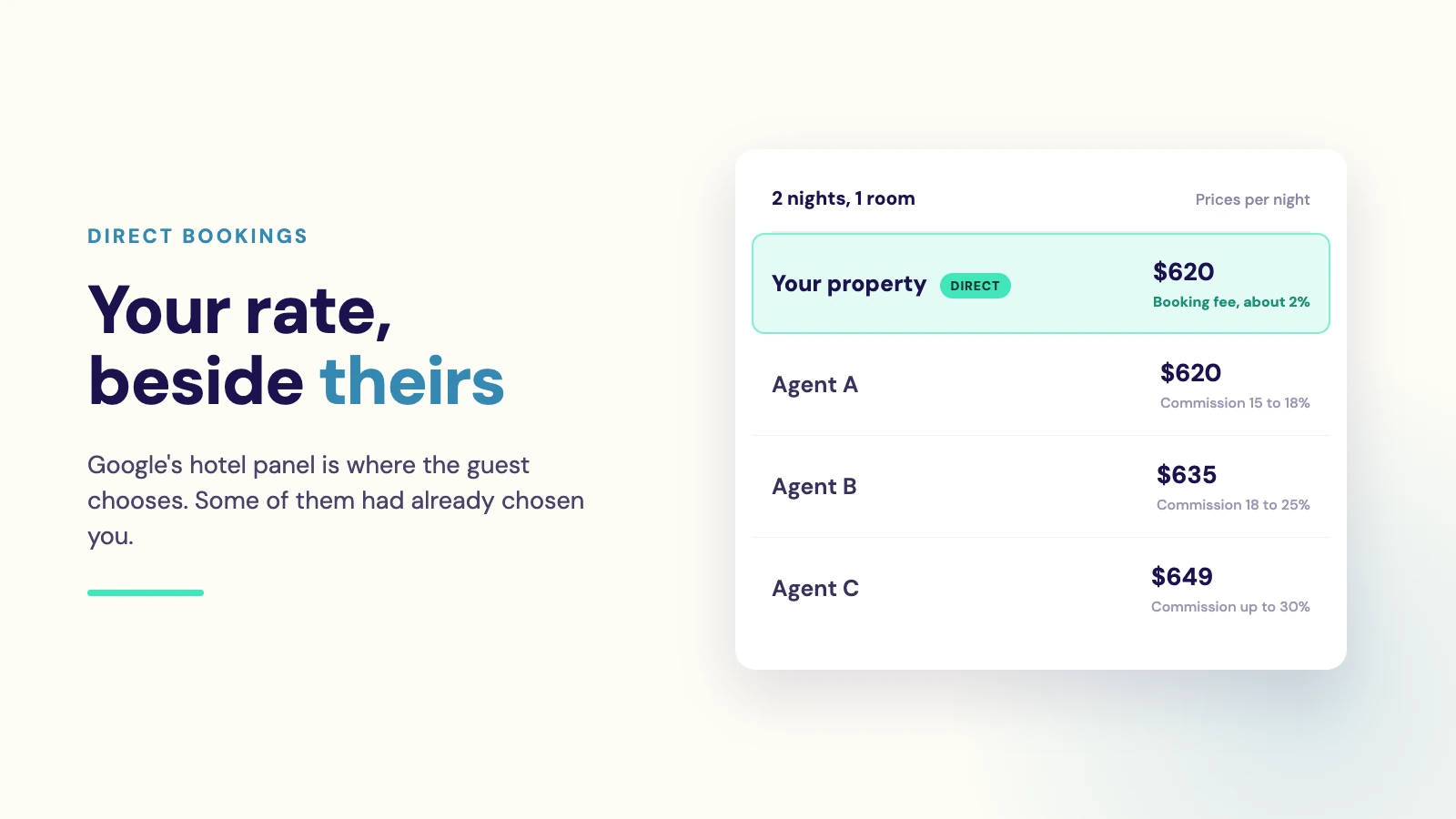
Paid Media
Why pay commission on guests you already won?
13 August 2026
Your brand, your reputation and your marketing earn the guest. Then the booking goes to an OTA, and the commission and the guest relationship go with it. How to use Google Hotel Ads to hold on to the booking, the relationship and the data.
Read article