
Every marketing team is being told to use AI. Fewer are being told the thing that decides whether it works: AI is only as good as the data you point it at, and most marketing data is a mess. Feed it disconnected channel reports and it gives you fast, confident, wrong answers.
Why AI needs structure
A model works from the data it is given and the question it is asked. Marketing data usually fails the first test. Google Ads measures itself, Meta measures itself, email and organic and the website each sit in their own tab on their own terms. Nothing joins them into how a customer actually moved from not knowing you to buying.
Ask AI "how is our marketing doing" across that, and it has nothing coherent to read. It will still answer, because it always answers. The answer just will not mean anything.
Organise the data around how customers buy
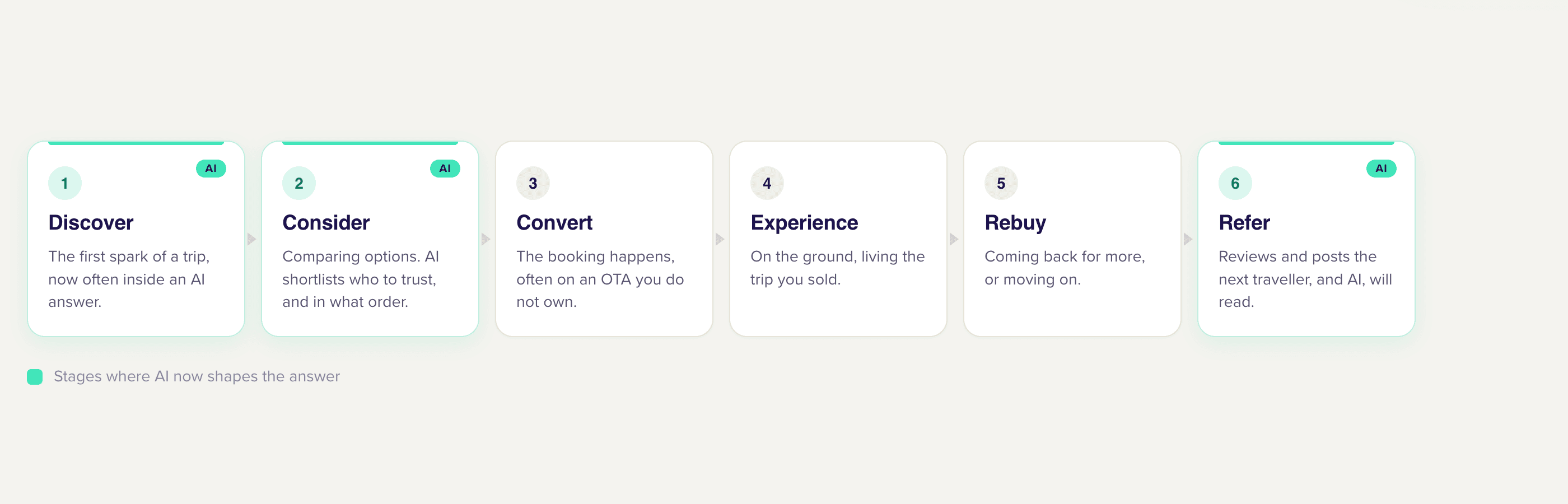
The fix is to structure measurement around the journey a customer takes rather than the channels you run. We report against six stages: Discover, Consider, Convert, Experience, Rebuy, Refer. One source of truth, every channel folded into the stage it serves (our stage framework sets these out).
Once the data is in that shape, a question has somewhere to land. "Has consideration improved since the campaign launched?" becomes answerable, because Consider is a defined thing with defined inputs rather than a guess assembled from five dashboards.
What that makes possible
With the journey organised, you can ask a real question and get a grounded answer in a minute. Where are people dropping. What moved after the last push. Which stage is holding growth back. The same AI that produced noise over messy data now produces a usable read, because it finally has a structure to reason over.
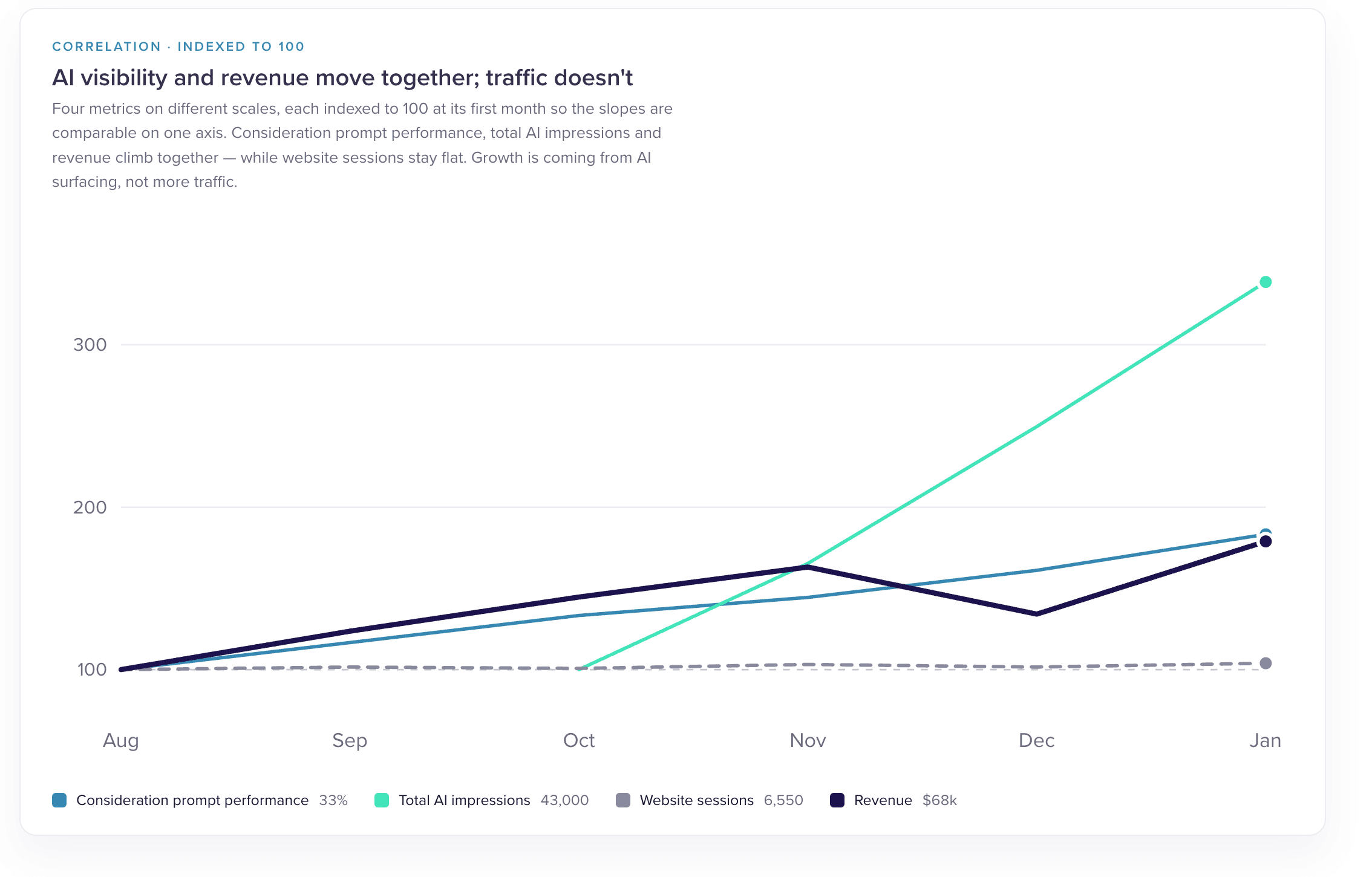
That is the difference between AI as a party trick and AI as a decision tool. The tool did not change. The data underneath it did.
Do this first
Before you buy another AI product, organise the measurement it will run on. AI applied to structured, journey-based data compounds. Applied to disconnected channel reports, it scales the guesswork. The order matters: the data foundation comes first, and everything you want AI to do for your marketing depends on it.
We can do this for you
Organising marketing measurement around the customer journey is the work we do at Data Story. We build the single source of truth, structure it to the six stages, and help you act on what it shows, so your data is ready the day you point AI at it.
We work with marketing leaders in destination and experience businesses: tourism and travel, across New Zealand and Australia. These are long, multi-touch journeys where the data is scattered across many touchpoints and easy to misread, and getting it right changes what you can tell your board.
If your board is pushing AI and your data is not ready for it, talk to us and we will get the foundation in place.

Written by
Dave Hockly
Director
Dave founded Data Story with a belief that better data leads to better marketing. With over a decade in digital marketing across tourism, hospitality, and growth businesses, he specialises in turning complex analytics into clear business strategy. Dave leads client relationships and oversees the agency's strategic direction.
LinkedInRelated articles
Destination and Experience
The tourism journey is too long to measure by gut
16 July 2026
Read article
Customer Journey
Why customer journey mapping for retention matters as much as acquisition
8 July 2026
Most annual plans are a stack of channel targets. The strongest ones start with how a customer moves through the business, then build the targets around it.
Read article
Customer Journey
Understanding your customer journey
26 March 2025
Purchasing is a decision that happens over time. By breaking that journey into key moments — and measuring them — you give your marketing the focus it needs to actually move the needle.
Read article